Play Sticz: A Modular Display Font for Playful Brand Identities
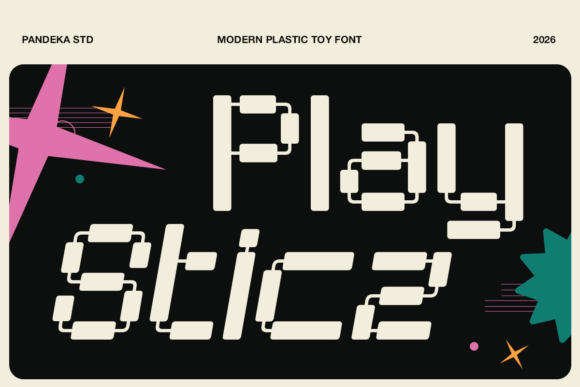
I opened a blank InDesign file at 2 AM, staring at a half-finished brand board for a new artisanal toy shop. The client wanted something that felt tactile, nostalgic, and undeniably modern, but every standard sans serif felt too sterile and every script font felt too fragile. That was the moment I decided to test Play Sticz. This modern display font is inspired by the playful structure of plastic toy components, built from modular shapes and connected forms that bring a fun, experimental, and slightly mechanical feel to any layout. After spending the next few hours mocking up logos, packaging labels, and social media headers, I realized this typeface wasn’t just another decorative addition—it was a structural solution for brands needing personality without sacrificing clarity.
Play Sticz as a Headline Typeface for Creative Studio Branding
When you first load Play Sticz, the visual language is immediately distinct. Unlike traditional fonts that rely on uniform stroke weights or organic curves, this typeface mimics the interlocking nature of construction toys. Each letter feels like a standalone component that can be stacked, aligned, or spaced to create rhythm. In my recent project for a creative studio identity, I used Play Sticz for the primary logo mark. The challenge with most display fonts is that they can look cartoonish if not handled with restraint; however, Play Sticz strikes a balance between whimsy and precision. The "slightly mechanical" edge prevents it from feeling childish, making it suitable for professional contexts where innovation is key.
The modular nature of the letters allows for interesting ligature effects when set in tight tracking. When I tested it on a dark background with white text, the negative space within the letters created a striking geometric pattern that drew the eye immediately. For a creative agency or a design-forward startup, using Play Sticz as a headline typeface signals that the brand understands structure, play, and modern aesthetics simultaneously. It works exceptionally well in all-caps settings, where the blocky forms create a solid visual anchor for the brand identity.
Play Sticz for Packaging Design and Product Labels
One of the most compelling use cases I found for Play Sticz was in packaging design. I applied the font to a mockup for a boutique skincare line targeting a younger demographic. The goal was to make the product stand out on a shelf crowded with minimalist beige bottles. By using Play Sticz for the product name, the label gained an immediate sense of dimensionality. The connected forms of the letters allowed me to treat the wordmark almost like a physical object sitting on the package.
This display font excels in short phrases rather than long paragraphs. On a small product label, readability is paramount, but so is character. Play Sticz offers enough contrast and unique glyph shapes to maintain interest even at smaller sizes, provided it isn't scaled down below legibility thresholds. I noticed that when paired with a clean, thin sans serif font for the ingredient lists and descriptions, the hierarchy became very clear. The bold, chunky presence of Play Sticz commands attention, while the supporting typography handles the informational density. This combination is perfect for crafters, handmade sellers, and online shop owners who need their packaging to communicate quality and fun simultaneously.
Play Sticz in Social Media Graphics and Digital Headers
In the realm of digital marketing, attention spans are fleeting. I tested Play Sticz on a series of Instagram posts and website hero banners for a local bakery’s seasonal menu refresh. The font’s experimental nature translates well to flat design graphics common on social platforms. Because the letters have a constructed, almost pixelated or Lego-like aesthetic, they render sharply on high-resolution screens. There is no ambiguity in the shapes, which helps the message pop against busy photographic backgrounds.
For web design, I placed Play Sticz in the main navigation header. While it is not recommended for body text due to its decorative weight, it serves as an excellent accent font for call-to-action buttons or section dividers. The slight mechanical feel adds a layer of sophistication that pure "fun" fonts often lack. When designing for entrepreneurs and marketers, having a typeface that bridges the gap between playful engagement and professional reliability is rare. Play Sticz delivers this duality, making it a versatile tool for content creators who need to maintain a consistent brand voice across different digital touchpoints.
Font Pairing Strategies and Technical Considerations
To get the most out of Play Sticz, thoughtful pairing is essential. Since this is a highly stylized display font, it needs a neutral partner to ground the design. In my review process, I found that pairing it with a classic serif font creates a sophisticated contrast—mixing the industrial playfulness of the headlines with the editorial elegance of the body text. Alternatively, a clean sans serif font works well for a more contemporary, tech-forward look. I avoided pairing it with other decorative or handwritten fonts, as the visual noise becomes overwhelming quickly.
Before committing to Play Sticz for final client work, it is crucial to check the included styles and alternates. Many modern fonts offer swashes or alternative glyphs that can enhance specific words. I spent time testing the kerning pairs, particularly with letters like 'A' and 'V', to ensure the modular spacing felt intentional rather than cramped. Additionally, always verify the file formats and webfont availability if you plan to use the typeface on a live website. Ensuring the font loads correctly across browsers preserves the crisp, mechanical edges that define its character.
Limitations and Best Practices for Commercial Use
While Play Sticz is a powerful asset, it is not a universal solution. Its strength lies in its specificity; it is best used as a creative font for short phrases, logo design, posters, flyers, and editorial design accents. It should generally be avoided for long-form body text, legal disclaimers, or formal corporate documents where neutrality and maximum readability are required. The playful structure can fatigue the reader if overused in dense blocks of copy.
Furthermore, before incorporating this commercial font into any brand identity, packaging, or merchandise, designers must review the licensing agreement carefully. Understanding the scope of use—for instance, whether it covers digital products, print-on-demand items, or broadcast media—is vital to avoid legal complications. For freelancers and small business owners, knowing that Play Sticz is optimized for impact in limited spaces allows you to deploy it strategically, ensuring that every use of the typeface contributes to a cohesive and memorable brand perception.