Retro Kindly: A Bold Display Font for Vintage-Inspired Branding
There I was, staring at a blank brand board for a local boutique that wanted to feel like it had just walked out of a 70s road trip movie. The client loved the idea of retro vibes but didn’t want anything cheesy or overdone. I needed something authentic, bold, and with just enough charm to make their branding pop without shouting. That’s when I opened up Retro Kindly, and instantly knew I was onto something.
Retro Kindly in Logo Design for a Nostalgic Café
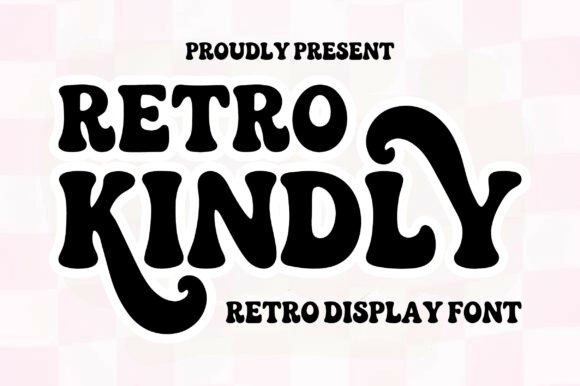
Retro Kindly is a display font through and through — it’s not made for long paragraphs or body text, and it doesn’t pretend to be. But as a logo font? It’s a gem. I used it on a café logo concept that leaned into vintage Americana, and the chunky shapes paired with playful curves gave it that warm, nostalgic feel we were after. It wasn’t just retro; it felt lived-in, like it belonged on a diner sign from the mid-70s.
What stood out was how well it balanced boldness with approachability. Even though the letters are thick and expressive, they don’t feel aggressive or overwhelming. Instead, they invite you in with their friendly rhythm and subtle character quirks. I tested it against other 70s-style fonts and found that Retro Kindly has more personality than most while still maintaining legibility in key areas like business cards and signage.
Retro Kindly for Brand Boards and Packaging Mockups
Next, I placed Retro Kindly on a brand board alongside color palettes and texture mockups. The contrast between the font’s groovy nature and the muted earth tones really highlighted its warmth. It brought energy to the design without clashing, which is rare for a display font in this category.
On a packaging mockup for a line of handmade soaps, Retro Kindly worked beautifully as the headline type. The label itself was small, but the font held up surprisingly well even at reduced sizes — especially when used sparingly for key phrases like “Handmade with Love” or “Natural Ingredients.” I didn’t use it for the full product name, but as an accent, it added just the right amount of charm.
One thing I noticed early on was that Retro Kindly shines brightest when given space to breathe. In tight layouts or tiny print, some of the curves can get lost, but when used in larger formats, it commands attention and feels intentional. For digital and print-on-demand packaging, that makes it perfect for headlines and taglines where impact matters more than readability.
Retro Kindly on Social Media Layouts and Web Headers
I also tried using Retro Kindly in social media layouts for a vintage clothing shop. The Instagram post headers immediately felt more engaging. The font’s organic flow helped the content stand out among the usual grid of images and minimalist designs. It gave the feed a cohesive, retro-inspired look that aligned perfectly with the brand’s story.
On the website hero section, Retro Kindly performed admirably as a headline font. It wasn’t too heavy, yet it had the presence to anchor the page. Visitors could read the main message clearly, and the visual weight encouraged them to scroll down. What I appreciated most was how it played nicely with secondary typefaces — I paired it with a clean sans serif for body copy, and the contrast created a strong visual hierarchy without confusion.
Font Pairing Tips for Retro Kindly
If you’re going to use Retro Kindly effectively in your design work, pairing it with the right supporting typeface is essential. I found that a minimalist sans serif like Montserrat or Open Sans works best for body text. The sharp edges and modern structure of these fonts provide a nice counterbalance to the bold, curvy nature of Retro Kindly.
You could also try pairing it with a softer script font for accents or subheadings — think something like Great Vibes or Allura. These pairings add depth and richness to the brand identity, making it feel curated rather than random. Just remember to keep Retro Kindly as the star of the show; it’s a display font and shouldn’t be overused in supporting roles.
When Not to Use Retro Kindly
While Retro Kindly is a powerful tool for branding projects with a vintage flair, it’s not without its limitations. It definitely isn’t suited for long-form content like blog posts or email newsletters. Its style is more about creating mood and atmosphere than conveying information in dense blocks.
Also, if you're working on a corporate or formal project, you might want to skip this one. Retro Kindly is great for creative studios, cafés, bakeries, or any brand looking to infuse a bit of retro soul into their visuals. But for law firms or financial institutions, it could come off as unprofessional or overly stylized.
Testing Retro Kindly Before Finalizing Client Work
Before committing to using Retro Kindly in a final deliverable, I always test it across multiple platforms and formats. I’ll create quick mockups of a logo in both black and white and color, check how it looks in print and digital environments, and see how it scales down on smaller elements like buttons or labels.
I recommend doing the same. Download a free version if available, and run it through the typical use cases for your clients: logos, business cards, web headers, packaging labels, and social graphics. This helps you understand how versatile it is and whether it fits the overall tone of the brand. You don’t want to fall in love with a font only to realize it doesn’t translate well across all mediums.
What Comes Included with Retro Kindly?
From what I’ve seen, Retro Kindly offers a solid set of styles and alternates that allow for customization within the constraints of a display font. There are several weights included, along with ligatures and swashes that give you more control over the final look. Multilingual support is also there, which is helpful if you're designing for international audiences or selling globally online.
The file formats are standard, so it should work across most design tools and web platforms. If you're planning to use it on a site, double-check if it supports webfont embedding — many premium fonts do, and it's crucial for SEO and user experience.
A Note on Licensing and Commercial Use
One thing I always stress to my clients is to review the commercial font licensing before jumping in. With Retro Kindly, it’s important to confirm whether the license allows for use in branding assets, websites, templates, merchandise, or print-on-demand products. Some fonts have strict usage limits, and missing those details can lead to legal headaches later.
If you're building a brand identity, using Retro Kindly on a logo, packaging, and social media graphics is fine — but if the brand plans to scale into apparel or stationery, ensure the font’s terms cover those uses. Always err on the side of caution and ask questions before finalizing a design system.
Final Thoughts on Retro Kindly for Real-World Projects
In the end, Retro Kindly became a cornerstone of the brand identity I was developing. It didn’t just fit the theme — it elevated it. Whether I was crafting a brand board, designing a shop sign, or laying out a homepage header, the font consistently delivered that 70s aesthetic with a modern touch.
Its boldness and playfulness make it ideal for brands that want to stand out without being loud. It adds warmth, nostalgia, and a sense of authenticity that’s hard to replicate with generic typefaces. And because it’s a display font, it knows when to take center stage — which is exactly where it should be.
If you're working on a project that needs a little extra groove, Retro Kindly is worth considering. It’s not just another Fonts option — it’s a Display font that tells a story. And sometimes, that’s what separates a good design from a memorable one.