Eddie Font Review: A Display Typeface with Avian Elegance
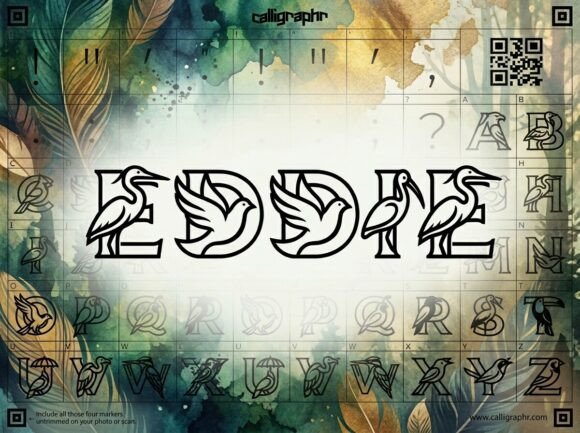
There I was, staring at a blank brand board for a local artisanal soap shop. The client wanted something fresh—something that evoked nature, simplicity, and creativity without feeling generic or overused. I needed a display font that could carry an artistic vibe while maintaining clarity and impact. That’s when I discovered Eddie, the bold, hollow-lettered typeface with minimalist bird silhouettes woven into its structure. It wasn’t just another decorative font; it felt like a story told through strokes and shapes.
Eddie in Logo Design for Creative Studios
I first tested Eddie on a logo draft for a small creative studio. The name of the business was “Skyline Studio,” and the concept revolved around open skies, inspiration, and clarity. Eddie immediately stood out because of its unique blend of geometric precision and soft, organic elements. The hollow letterforms gave it a modern edge, while the subtle bird motifs added a layer of meaning and visual interest. In logo form, it performed exceptionally well at large sizes, especially on signage and digital banners. However, I noticed that at smaller sizes—like in a website footer or a printed business card—the detail got lost slightly. So if you’re using Eddie as a logo font, make sure to reserve it for headlines and key visuals rather than supporting text.
Using Eddie in Brand Boards and Visual Systems
Next up was the brand board. I paired Eddie with a muted palette of blues and whites, echoing the sky and feathers. The contrast between the strong, open forms of Eddie and the softer color scheme created a balanced yet dynamic mood. This is where Eddie really shines—it doesn’t demand attention by shouting; instead, it invites you in with its rhythm and elegance. When creating a visual system for a boutique or lifestyle brand, Eddie can serve as the emotional anchor. Its artistic soul fits perfectly into branding that wants to feel both grounded and aspirational.
Eddie for Packaging Mockups and Product Labels
On to packaging mockups. I used Eddie for labels on a line of handmade bath bombs and natural candles. The minimalist bird silhouettes were a perfect match for the clean, eco-friendly aesthetic. At larger sizes on product boxes, the font added a sense of movement and lightness. But again, when I tried shrinking it down for ingredient lists or small tags, readability suffered. That’s a common issue with display fonts—they’re made to be seen from a distance, not read closely. If you're considering Eddie for packaging design, focus it on headlines and brand names. Let it sing in the hero section, and let other more legible styles take over for details.
Eddie on Social Media Graphics and Web Headers
Social media layout work often requires quick, impactful visuals. I layered Eddie into Instagram posts for a wellness blog, using it for quote headers and call-to-action buttons. The results were striking. The rhythmic flow of the letterforms matched the calming tone of the content, and the avian theme subtly reinforced the idea of rising above stress and embracing freedom. As a web design element, it worked wonders in hero sections and landing page titles. Just one thing: avoid using it for long paragraphs or dense blocks of text. It's not meant for body copy. But for short phrases and headlines, it adds a memorable touch that sets your site apart from the usual sans serif monotony.
Font Pairing Ideas with Eddie
If you're working with Eddie in a full identity project, you’ll want a complementary typeface for body text. I found that pairing it with a serif font like Lora or Merriweather helped ground the design without clashing. For more modern looks, a clean sans serif font such as Montserrat or Raleway provided excellent contrast. The key is to use Eddie sparingly and let it play off a secondary font that ensures readability and accessibility. Avoid pairing it with overly ornate script fonts unless you're going for maximalist, handcrafted aesthetics. In most cases, a minimalist approach will highlight Eddie's strengths best.
Testing Eddie Before Finalizing a Project
Before committing to Eddie in a client’s final branding package, I always test it across multiple platforms. I placed it on a homepage hero banner, a printed menu, a packaging label, and even a flyer for a pop-up event. Each time, I noted how the hollow letterforms interacted with different backgrounds and spacing. The font holds up well in digital formats but needs careful handling in print, especially with low-resolution presses. I recommend testing it at 30pt and below to see how much detail remains visible. Also, check how it responds to all caps versus title case—its rhythm changes slightly depending on capitalization.
Eddie Licensing and Commercial Use
One thing every designer should keep in mind when using Eddie for real-world projects is to review its commercial font licensing. I had a situation where a client wanted to print a series of custom greeting cards using the font, and we nearly missed a critical clause about webfont usage. Always confirm what kind of rights you have—especially if you're planning to use Eddie in templates, merchandise, or digital products. Some premium fonts restrict use to specific platforms or require extended licenses for certain applications, so double-check before going live.
When Eddie Might Not Be the Right Choice
While Eddie is undeniably unique and expressive, it’s not the right fit for every project. If you're designing a formal corporate identity, this display typeface might come off as too whimsical or niche. Similarly, for long-form editorial design, it lacks the necessary character for extended reading. The same goes for anything needing high legibility in small sizes—think legal documents, infographics, or mobile UI. But if you're working on a brand that leans into artistry, minimalism, and a touch of poetic symbolism, then Eddie is hard to beat.
Eddie for Boutique Branding and Handmade Shop Identities
In a recent project for a handmade jewelry brand, I integrated Eddie into the brand’s visual toolkit. The shop focused on lightweight, elegant designs inspired by nature, and Eddie’s bird-infused letters echoed that theme beautifully. It appeared on the storefront sign, product tags, and even in animated social media previews. The feedback from the client was overwhelmingly positive—they loved how it conveyed their brand’s personality without being too literal. As a brand identity tool, Eddie adds a level of sophistication that feels intentional and thoughtful. Just ensure that the rest of your visual language supports its artistic nature.
Exploring Included Styles and Multilingual Support
Some Fonts offer dozens of weights and variations, but Eddie takes a more curated approach. It includes a few core styles that are versatile enough for most branding needs. I appreciated the availability of alternates and ligatures, which allowed me to fine-tune the look of each word to suit the project’s tone. While it does support several languages, it’s not a comprehensive international set. If you need broad multilingual coverage, you may want to supplement it with a more robust secondary font. Still, for English-centric brands, it offers solid flexibility.
Why Eddie Works for Short Phrases and Decorative Typography
As a display font, Eddie thrives in environments where it can be the focal point. It works great for taglines, brand mottos, and short promotional phrases. I used it on a poster for a community art show with the phrase “Take flight with Eddie” as the headline. The boldness of the letterforms drew the eye instantly, and the embedded bird shapes gave it a subtle narrative depth. Whether it’s a boutique, a café, or a creative studio, Eddie can elevate your design assets with a single stroke of confidence.
So if you're looking for a typeface that brings an artistic flair to your next project, give Eddie a try. Test it out on a logo draft, a brand board, or a packaging mockup. See how it interacts with your color schemes and imagery. And remember, while it’s not a general-purpose font, there’s no shortage of opportunities where it can truly shine—especially in the world of display typography.